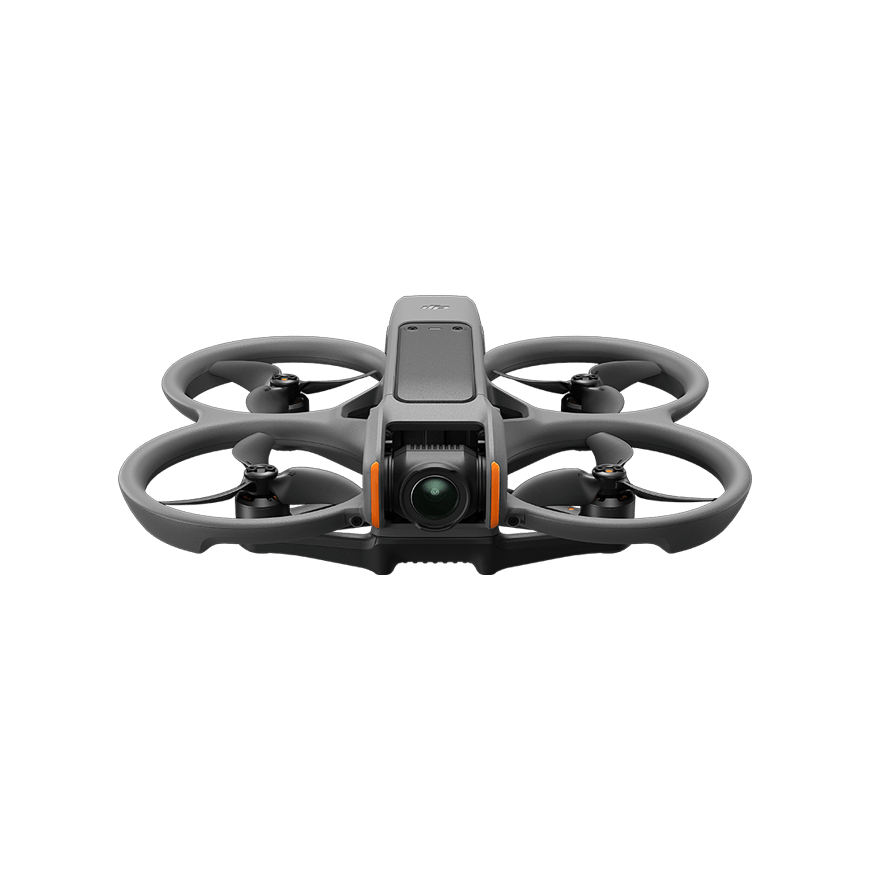
AIRFRAME 01
DJI Avata 2
FPV · GOGGLES 3 + FPV RC 3 · >250 g · BUILT-IN REMOTE ID
REGISTERED
RID BROADCAST
Goggles on = spotter required, standing next to you. Registration required at any weight.
ROD & STAFF MEDIA · COMMERCIAL DRONE OPERATIONS
The complete path to your FAA Part 107 Remote Pilot Certificate — every requirement in order, a two-week study sprint, and a practice exam built to get you a first-try pass. Any flight that supports the business is commercial. TRUST doesn't cover it. This does.
UAG EXAM · 60 QUESTIONS · 70% TO PASS · $175 · PSI TESTING CENTER
AIRFRAME 01
FPV · GOGGLES 3 + FPV RC 3 · >250 g · BUILT-IN REMOTE ID
Goggles on = spotter required, standing next to you. Registration required at any weight.
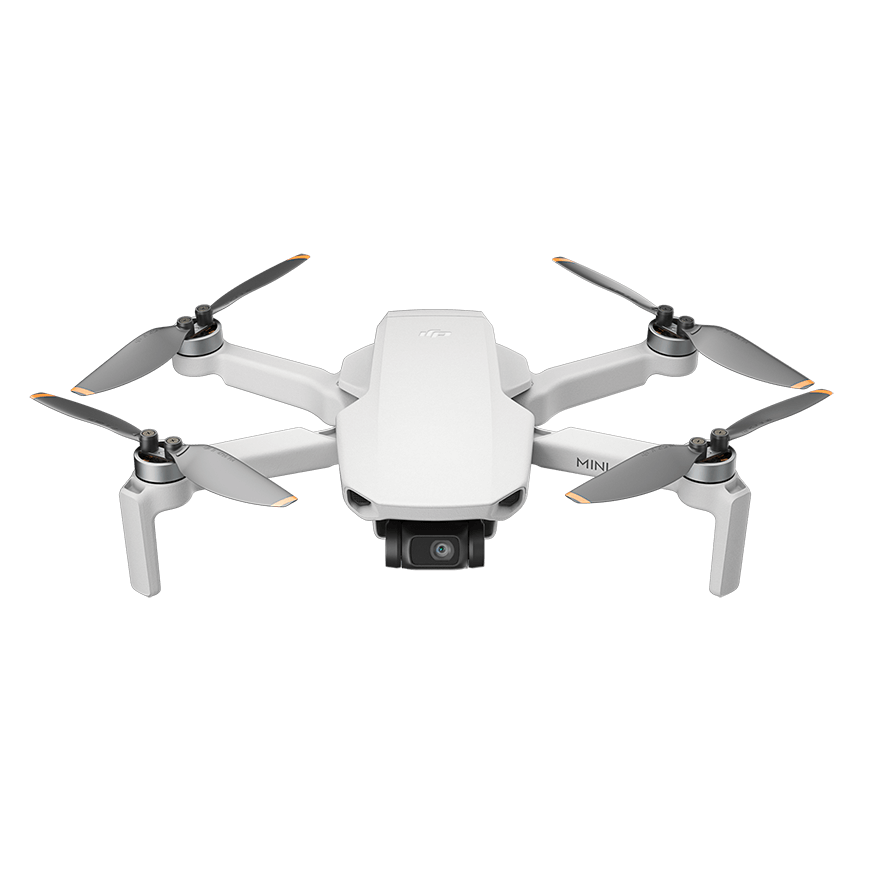
AIRFRAME 02
4K UHD · <249 g · 3-AXIS GIMBAL · 31 MIN
Under 250 g — but the sub-250 exemption is recreational-only. Under Part 107 it gets registered too.
SEC 01 / THE FLIGHT PLAN
In order. Each one unlocks the next. Source of truth is faa.gov/uas — rules change, verify before acting.
Create your FTN at IACRA, then schedule the UAG exam with PSI for ~two weeks out. A booked exam date is the forcing function for everything else.
Weight your reps toward airspace + sectional charts — that's where people fail. Then regulations, weather, loading, operations. The day-by-day schedule is below.
Score 70%+ at the PSI center, then apply for the Remote Pilot Certificate in IACRA with your FTN + exam ID. TSA vetting runs automatically — temporary certificate lands by email in days.
Both drones at FAADroneZone under Part 107 — $5 each, 3 years. Enter Remote ID serials, label each airframe with its registration number, and verify Remote ID is broadcasting in-app.
Sim before every step-up → Normal mode in an open field → Sport with wider margins → Manual only after Sport is boring. Prop guards on, spotter present, land at 25–30% battery. No exceptions.
Every flight, forever: airspace check, LAANC if controlled, Remote ID confirmed, spotter when goggles are on, never over people, permissions in writing. The routine is at the bottom of this page.
SEC 02 / MISSION CHECKLIST
Progress is stored in this browser — the topbar and the mission dial track you automatically.
SEC 03 / 14-DAY STUDY SPRINT
0/14 days flown · Tap a day when it's done. Day 7: schedule the exam. Day 14: take it.
FREE RESOURCES
SEC 04 / STUDY GUIDE
Condensed from the FAA study guide and ACS. Most people fail on airspace and sectional charts — spend your reps there.
MEMORY ITEMS — these exact numbers get tested
Part 107 is built around one person: the remote pilot in command. You are directly responsible for and the final authority as to the operation — the aircraft's condition (§107.15), the preflight assessment (§107.49), the crew, and the failure case if the link drops (§107.19). In an emergency you may deviate from any rule to the extent required (§107.21), and report it if the FAA asks.
VLOS means unaided human eyes — corrective lenses only, no binoculars, no goggle feed (§107.31). When you fly FPV, a visual observer standing next to you fulfills see-and-avoid, and you two must stay in communication at all times (§107.33). This is a hard requirement, not a best practice.
No flight over people unless they're participating, sheltered, or your aircraft meets Category 1–4 rules (§107.39) — at races, shoot from beside the course. Night flight is legal without a waiver since 2021: anti-collision lighting visible 3 SM plus current training. Moving-vehicle ops only over sparsely populated areas (§107.25).
Waivers go through FAADroneZone. Certificates get presented to FAA/NTSB/TSA/law enforcement on request (§107.7). And remember the trap answer: TRUST covers recreational flying only — the moment a flight supports the business, it's Part 107.
MEMORY ITEMS
Class A (18,000 ft MSL and up) will never concern you. Class B wraps the busiest airports in stacked shelves — "upside-down wedding cake." Class C surrounds mid-size towered airports, Class D the smaller towered fields. Class E is controlled airspace that starts at either the surface (near some airports), 700 ft AGL (magenta vignette), or 1,200 ft AGL. Everything else is Class G — uncontrolled, no authorization needed, where most of your flying happens.
The exam's favorite trick: Class E that begins at 700 or 1,200 ft AGL doesn't restrict you at 400 ft — below its floor you're in G. But Class E designated to the surface around an airport requires authorization just like B, C, and D.
For controlled airspace, request through a LAANC app. Each airport has a UAS Facility Map — a grid of pre-approved ceilings (0, 50, 100, 200, 400 ft). Request at or below the grid number and authorization is near-instant. Above it, you need further coordination. Zero-grids near runways mean no.
Prohibited areas (P-40, White House): never. Restricted areas (artillery, gunnery): permission from the controlling agency when active. MOAs: legal but military jets may be fast and low — extreme caution. TFRs pop up for stadiums, wildfires, and VIPs — they're in the NOTAM system and your airspace app, and busting one is the fastest way to lose a certificate.
MEMORY ITEMS — chart color code
The knowledge test hands you a sectional excerpt and asks what's legal where. Drill three skills: identifying airspace from line style and color, reading airport data blocks, and decoding MEFs.
The big-small number pair in each quadrant (a large 1 with a small 2) is the highest known terrain or obstacle in that quadrant: 1,200 ft MSL. The trap: it's MSL, not AGL. Your 400-ft limit is AGL — different reference.
NAME (ID) — CT 118.3 ★ — ATIS 124.0 — 26 L 72 122.95 decodes as: control tower on 118.3 (★ = part-time), field elevation 26 ft MSL, lighted runway, longest runway 7,200 ft, UNICOM 122.95. A C in a circle is the CTAF. Obstacles: 1049 (394) = top at 1,049 MSL, 394 AGL.
Expect one "find the point at 30°15'N, 95°30'W" question. Latitude lines run horizontally (measure N–S), longitude vertically (measure E–W); each small tick is one minute, 60 minutes to a degree. Slow down and count ticks — free points.
MEMORY ITEMS
Weather questions are mostly reading comprehension on METARs and TAFs. Read the whole line left to right: station, time (Zulu), wind, visibility, weather, clouds, temp/dewpoint, altimeter. KTPA 121853Z 18012G20KT 3SM TSRA BKN010 OVC020 25/23 A2995 — Tampa, 12th at 18:53Z, wind 180@12G20, 3 miles in thunderstorm rain, broken 1,000, overcast 2,000. That's a hard no-go, and the exam wants you to say why.
Heat, humidity, and elevation all thin the air. Thin air = less prop bite, less lift, more battery burn. A 95° July afternoon in Ocala meaningfully cuts your climb rate and endurance versus a 65° morning. When temp and dewpoint converge, expect fog.
Three ingredients: moisture, instability, lifting action — the Florida sea breeze supplies lift on schedule every summer afternoon. Stages: cumulus (updrafts), mature (rain reaches the ground; updrafts + downdrafts, shear, microbursts — most hazardous), dissipating (downdrafts). Fly mornings; be landed before the buildups tower.
MEMORY ITEMS
Banking loads the airframe: the steeper the turn, the more lift (and power) needed to hold altitude. 60° of bank doubles the effective weight. For FPV this is why hard cornering eats the battery and why aggressive maneuvers near the ground leave no margin.
Everything strapped on counts against performance. An off-center payload (a mounted light, a bigger battery) shifts CG and degrades handling. LiPos deliver less under load when cold and sag hard near depletion — which is the engineering reason behind the standing rule: land at 25–30%, no exceptions. The reserve is your headwind-home and go-around margin.
MEMORY ITEMS
You always yield. A crop duster, a medevac helicopter, a Cub on floats — if it has a human in it, you descend and give way (§107.37). Near airports, know where traffic flows: standard patterns turn left, and at non-towered fields pilots call their positions on the CTAF.
The exam loves hazardous attitudes with their antidotes: anti-authority → "follow the rules"; impulsivity → "think first"; invulnerability → "it could happen to me"; macho → "taking chances is foolish"; resignation → "I'm not helpless." Run IMSAFE on yourself before committing to a shoot — heat, dehydration, and deadline stress are real performance killers in Florida summer.
CRM scaled to drones: brief your visual observer, agree on callouts ("traffic three o'clock, low"), keep comms open the whole flight, and actually listen when they call an abort. The PIC has final authority — CRM is how you avoid needing it.
SEC 05 / THE CHART ROOM
The exam hands you sectional chart excerpts and asks what's legal where. Train your eyes here: decoder cards first, then the real live FAA chart, then drill on it. Built from the 7/31 training session.
DECODER 01 — AIRSPACE LINE STYLES · the #1 tested chart skill
Memory hooks: solid = serious (B/C) · dashed = touches the ground (D/E-sfc, LAANC either way) · fuzzy = the floor is upstairs (700 ft) · blue = tower, magenta = no tower.
DECODER 02 — THE SIDE VIEW · what those lines mean at drone altitude
The green line slides under both magenta floors untouched — but it's trapped inside the dashed Class D box. Dashed lines reach the ground; fuzzy floors float above you.
DECODER 03 — THE AIRPORT DATA BLOCK · elevation / lighting / runway / radio
Line 3 is always elevation · lighting · runway · radio. Runway length drops two zeros (52 = 5,200 ft). The elevation unlocks the exam's altitude math: MSL = AGL + field elevation. At a non-towered field, the frequency with a circled C is the CTAF.
DECODER 04 — THE FOUR KINDS OF NUMBERS · MSL unless it's in parentheses
Ring numbers and MEFs are in hundreds of feet MSL. The only AGL number on the whole chart wears parentheses. Your 400-ft limit is AGL — bridge with the field elevation.
DECODER 05 — SPECIAL USE AIRSPACE · the military & mayhem layer
Restricted: agency permission when active. Prohibited: never. Warning/Alert: same hatch — offshore hazard / heavy training. MOA: legal, eyes up. MTR: 4 digits = the whole route at or below 1,500 AGL — your neighborhood.
THE REAL THING — LIVE FAA SECTIONAL · same ink as test day
This is the current FAA VFR sectional, served from the FAA's own tile servers — pan and zoom anywhere in the country. Everything in the decoders above is on this map for real.
MAP DRILL — fly there with the buttons, answer out loud, then reveal
Class B. Each ring's numbers read ceiling over floor in hundreds of feet MSL — Tampa's cake tops out at 10,000 MSL ("100"). The inner ring says SFC: controlled to the ground, LAANC territory with zero-grids near the runways.
Dashed blue — Class D, surface to the number in the segmented box inside the ring, in hundreds of feet MSL. LAANC required at any drone altitude inside it.
The parachute — Skydive City is one of the busiest drop zones in the country. Jumpers descend through your altitude band. Check the line style touching the field too: fuzzy magenta = Class G below 700 ft; a dashed magenta ring = E to the surface and LAANC.
Its own dashed blue Class D ring, surface up — a military field with a tower. Between MacDill's D and Tampa's B, the whole peninsula is LAANC-or-stay-home.
Restricted areas over the Avon Park Air Force Range — live-fire territory. Entry requires permission from the controlling agency when active. Operationally: fly somewhere else.
The MEF — highest known terrain or obstacle in that lat/long quadrant, in thousands + hundreds of feet MSL. A big 1 with a small 4 = 1,400 MSL. It's MSL, not AGL — the exam's favorite units trap.
Bold number = tip altitude MSL; (parentheses) = height AGL. These masts push past 1,000 ft AGL — the tall skinny symbol — with guy wires splaying hundreds of feet. This farm is why the quadrant's MEF is so high.
EXAM MODE — HOW THE TEST ACTUALLY SHOWS CHARTS
On test day the chart questions point you to numbered figures in the FAA Airman Knowledge Testing Supplement (CT-8080-2H) — a printed booklet handed to you at the PSI center. Two things to know: the excerpts are scans of older chart editions (don't panic if the ink looks dated), and the booklet's first pages carry the full sectional legend — a free answer key for any symbol you blank on. Flip to it without shame.
The real plates are loaded below and wired into the practice exam. Same figure numbers, same areas, same booklet you'll hold.
THE BOOKLET — FAA-CT-8080-2H
Every plate the UAG exam can hand you. Tap one to open it full screen — pinch, scroll, or use + / − to zoom the way you'd hold the page up to your face. Start with the legend.
Public domain — US Government work. Source: FAA Airman Knowledge Testing Supplement for Sport, Recreational, Remote, and Private Pilot (CT-8080-2H). Latest edition at faa.gov ↗
SEC 06 / FLIGHT DECK RADIO
Seven episodes, read by Áine. Built for driving — one idea at a time, recaps at the end of every episode. Your phone's lock screen and car display get full play controls. 0/7 heard
SEC 07 / PRACTICE EXAM
105-question bank modeled on the FAA UAG exam — including chart questions that hand you the real testing-supplement plates, same as test day. Real exam: 60 questions, 120 minutes, 70% to pass. Go in at a steady 85%+.
Ten questions from one domain. Hammer your weak areas after each full test.
SEC 08 / STANDING ORDERS
Print it on the inside of your skull. This is what keeps the certificate — and the gear.
Airspace check in B4UFLY / Aloft before every flight. Controlled airspace → request LAANC — instant in most grids.
Remote ID broadcasting — confirm in-app before spin-up.
Goggles on = spotter required, standing next to you, comms the whole flight.
Never over people or crowds. At races: shoot from the side of the course, never over runners.
Permissions in writing — race director for the event, property owner for the launch site.
Weather + wind check, then log the flight afterward.
Land at 25–30% battery — no exceptions. Prop guards stay on. New location = conservative first flight.